
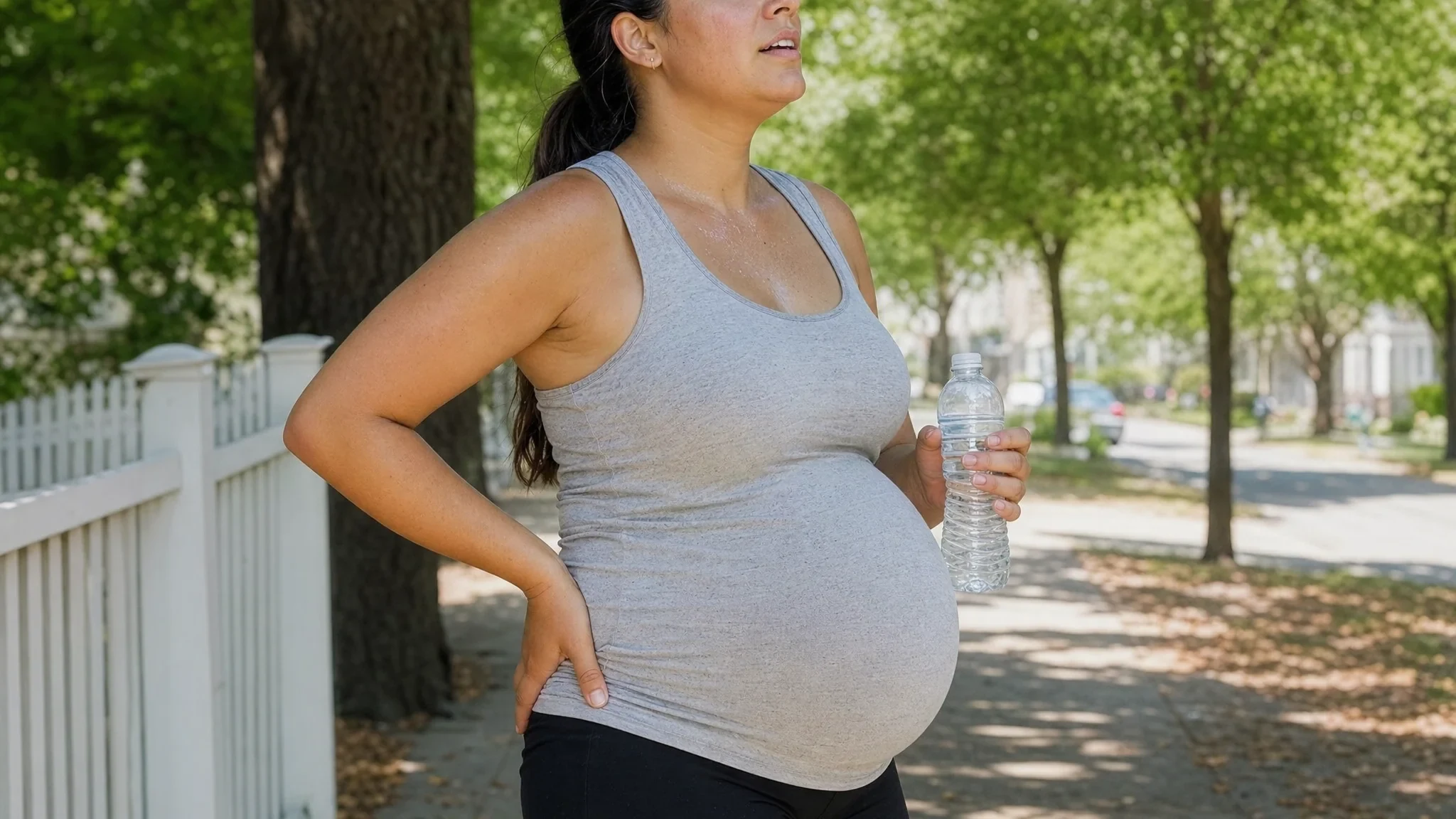
Yes — for normal pregnancy swelling, gentle regular walking is one of the things that often helps. Moving your calf muscles pumps fluid back up from your feet and ankles, while standing still lets it pool. The NHS suggests regular walks and foot exercises, along with avoiding long periods of standing and resting with your feet up. The important exception: sudden swelling in your face, hands, or feet can be a sign of preeclampsia and needs a call to your provider right away. Gradual swelling, usually worse at the end of the day and later in pregnancy, is very common.
Why do ankles swell in pregnancy? #
Your body holds more fluid in pregnancy, and gravity pulls it to the lowest parts of the body. The growing uterus also puts pressure on blood vessels returning blood from your legs. Hot weather and long stretches of standing or sitting make it worse — which is why swelling is often worst on summer evenings or after a long workday.
How does walking help swollen ankles? #
Every step contracts your calf muscles, which squeeze the veins and help push fluid back toward your heart. ACOG also notes that standing motionless can cause blood to pool in your legs and feet. So a short walk is often better for puffy ankles than standing in one place, and a few laps around the house beat sitting for hours.
What's the best way to walk with swollen ankles? #
- Go for shorter, more frequent walks — 10–20 minutes a few times a day.
- Walk earlier in the day, before swelling builds, and avoid the hottest hours.
- Keep a gentle, talk-test pace on flat routes.
- Wear comfortable, supportive shoes with room to spare — no tight straps.
- Ask your provider whether compression socks or stockings make sense for you.
- Hydrate well; drinking enough water is still important even when you're swollen.
Which foot exercises help with swelling? #
The NHS recommends simple foot exercises you can do sitting or standing: bend and stretch your foot up and down 30 times, and rotate each foot in a circle 8 times one way and 8 times the other. They're easy to do while feeding, working at a desk, or watching TV.
What should I do after a walk? #
- Rest with your feet up for 15–20 minutes.
- Lie on your left side if comfortable, which can help circulation.
- Take off tight shoes and socks.
- Do a round of foot circles and ankle pumps.
When is swelling a warning sign? #
Call your provider or labor and delivery immediately if you have a sudden increase in swelling in your face, hands, or feet; a very bad headache; vision problems like blurring or flashing lights; severe pain just below your ribs; heartburn that doesn't go away with antacids; or you feel very unwell or start vomiting. These can be signs of preeclampsia, the NHS warns. Also call promptly for swelling in only one leg, especially with calf pain, warmth, or redness, which can signal a blood clot.
Puffy ankles at the end of a long day are common. Sudden swelling with a headache is a phone call, not a walk.
Is it okay to walk if my feet are very swollen? #
If the swelling is gradual and you've had normal checkups, a short, easy walk followed by feet-up rest is usually fine — and may make you more comfortable. If walking makes your feet throb or your shoes painfully tight, shorten the walk or try water walking or swimming, which many moms find relieves swelling.
How can a walking pod help? #
Late pregnancy can feel like sitting on the couch with your feet up forever. A pod of moms at your stage makes short, slow, bench-friendly walks feel normal and social, and gives you someone to ask, “is this much swelling normal?” — then reminds you to check with your provider.
FAQ #
Does walking reduce swelling in pregnancy?
Regular gentle walking can help normal pregnancy swelling by moving fluid out of your legs. Pair it with feet-up rest and foot exercises.
Is swelling in ankles normal in the third trimester?
Gradual swelling, especially at the end of the day, is common later in pregnancy. Sudden swelling needs a call to your provider.
Should I walk or rest with swollen feet?
Both. Short walks help circulation, and resting with your feet up afterward helps fluid drain. Avoid long periods of standing still.
When is pregnancy swelling dangerous?
Sudden swelling of the face, hands, or feet — especially with severe headache, vision changes, or pain under the ribs — can signal preeclampsia. Call right away.
If walking alone keeps slipping off your list, MaMile matches you with a small pod of moms at your stage for gentle, no-pressure walks and check-ins. Browse more guides at mamile.app/articles or join a pod when you're ready.