
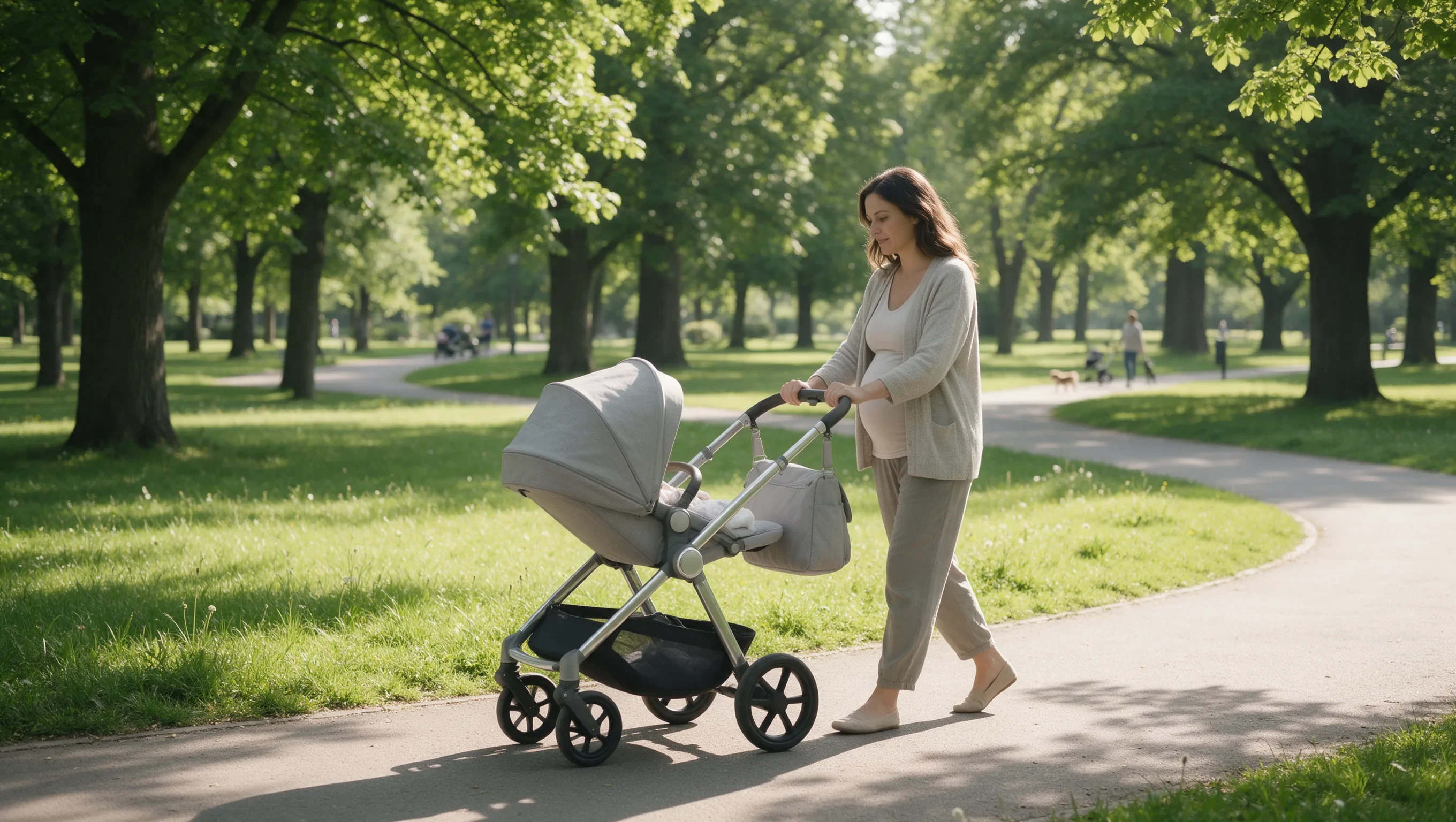
Many pregnant women experience round ligament pain yet still enjoy short walks when they make simple adjustments. The key is starting slowly, shortening strides, and treating any sharp twinge as an immediate cue to stop. Walking can still feel supportive for mood and circulation as long as pain stays mild and manageable. Round ligament discomfort often catches moms by surprise during everyday movement because the ligaments that support the growing uterus stretch and tug with each step or turn. In daily life this might happen when you reach for something on a high shelf, stand up quickly from the couch, or simply change direction on the sidewalk. The good news is that most women find they can keep moving gently once they learn to read their body’s signals and modify their pace. Listening to these cues early helps prevent the pain from escalating and lets you stay consistent with light activity that supports both physical comfort and emotional steadiness throughout the trimester.
What does round ligament pain feel like during a walk? #
Round ligament pain often shows up as a quick pull or sharp stitch on one or both sides of the lower belly, especially when you change direction or stand up from sitting. During a walk it may appear after the first ten minutes once the ligaments have warmed and stretched. Some moms notice it more on the right side because the growing uterus tilts that way. The sensation usually eases within a minute or two once you slow down or pause. In practice this pain can feel different from day to day depending on how much fluid you have had, how long you have been on your feet, and even the temperature outside. On cooler mornings the ligaments may feel tighter at the start, while warmer afternoons can bring a dull ache that lingers after the walk ends. Many women describe it as a sudden jab that makes them catch their breath, followed by a low-grade soreness that fades once they rest. Tracking these patterns in a simple note on your phone can help you anticipate when the discomfort is most likely to appear so you can plan shorter loops or choose flatter routes on those days.
How should I warm up before walking with round ligament pain? #
Begin with two or three minutes of gentle marching in place or slow hallway pacing while you focus on relaxed breathing. Follow with a few seated pelvic tilts or side bends to loosen the lower belly before heading outside. This brief preparation helps the ligaments lengthen gradually instead of snapping into action. Many women find the first few blocks feel easier after this simple routine. Taking an extra minute to stand sideways at the kitchen counter and gently shift weight from one foot to the other can also release tension in the hips and pelvis before you step out the door. If you have time, a warm shower beforehand can soften the tissues so the initial steps feel less startling. The goal is never to push through stiffness but to invite the body into motion slowly so the round ligaments have time to adjust to the changing demands of each stride.
What stride changes reduce round ligament discomfort? #
- Take shorter steps and keep your feet closer to the ground so the pelvis stays more level.
- Avoid big lunges or sudden turns that yank the ligaments.
- Swing your arms naturally and keep your posture tall but not rigid.
- If pain spikes, stop, place one hand under your belly, and breathe until it settles.
- Choose smooth surfaces like neighborhood sidewalks instead of uneven grass or gravel that forces extra hip movement.
- Pause every five minutes for a quick shoulder roll and deep exhale to reset tension in the core.
When is round ligament pain a signal to stop walking? #
Sharp, one-sided pain that does not ease within a minute or two, pain that travels with spotting or dizziness, or pain that feels different from your usual round ligament twinges all warrant a pause. If you need to sit or lean against something to catch your breath, end the walk and contact your provider. Related pelvic girdle issues can overlap, so compare notes with the guidance in our article on pregnancy walking and pelvic girdle pain. It is also wise to notice whether the pain returns at the same point in every walk or whether it appears earlier each day, which may suggest you need an even shorter route or a rest day. Keeping a small water bottle and a snack in your pocket can prevent dehydration or low blood sugar from amplifying normal ligament twinges into something more uncomfortable.
How long should these modified walks last? #
Start with ten to fifteen minutes on flat ground and build only if pain remains mild. Two shorter outings in a day often feel better than one long stretch. Pay attention to how you feel the rest of the afternoon; lingering soreness the next morning is a sign to shorten tomorrow’s route. Consistency with gentle movement matters more than distance right now. Some moms discover that breaking a twenty-minute walk into two ten-minute segments with a short sit in between keeps the ligaments happier and allows them to enjoy the fresh air without pushing limits. If you live near a park with benches, plan your route around those rest spots so you can pause without feeling like you have to turn around and go home. Over time you may notice that your comfortable window grows naturally as your body adapts, but only if you respect the smaller steps and slower starts each day.
Are there other warning signs to watch while walking pregnant? #
Round ligament pain can overlap with other pregnancy discomforts, so keep the general list of exercise warning signs handy. Review the common red flags in our guide on exercise warning signs in pregnancy so you know when to rest and call your care team. Beyond the usual dizziness or bleeding, watch for sudden swelling in one leg, a racing heartbeat that does not calm with rest, or pain that moves into the middle of your back. These can point to different issues that deserve prompt attention rather than continued walking. Keeping your phone charged and telling a family member your planned route adds an extra layer of ease so you never feel alone if something feels off.
What daily habits support walking comfort with round ligament pain? #
- Stay hydrated and eat a small snack with protein before heading out.
- Wear supportive shoes and consider a light belly band only if your provider has okayed it.
- Empty your bladder right before the walk to reduce extra pressure.
- End with a few minutes of slow breathing and gentle side stretches at home.
- Choose loose clothing that does not press on the lower belly and carry a small towel to wipe your face if heat adds to discomfort.
- Practice a quick posture check at each traffic light by lifting gently through the crown of your head and softening your shoulders.
If round ligament pain keeps interrupting your usual routes, joining other moms in a stage-matched walking pod can help you learn new pacing tricks together. Join a Pod to walk with women navigating the same trimester.